


Send Message
Privacy statement: Your privacy is very important to Us. Our company promises not to disclose your personal information to any external company with out your explicit permission.

Guangdong Panata Fitness Equipment Co.,Ltd
There is no single piece of equipment that is best for every gym. The ideal choice depends on your target members, training programs, facility size, purchasing budget, and long-term business goals. A well-planned gym typically combines commercial Strength Training Equipment, free weights, cardio machines, and functional training accessories.
As a professional GYM Equipment manufacturer, Ganas provides Fitness Equipment solutions for commercial gyms and fitness facilities. Understanding the main equipment categories and their applications can help buyers make informed purchasing decisions.
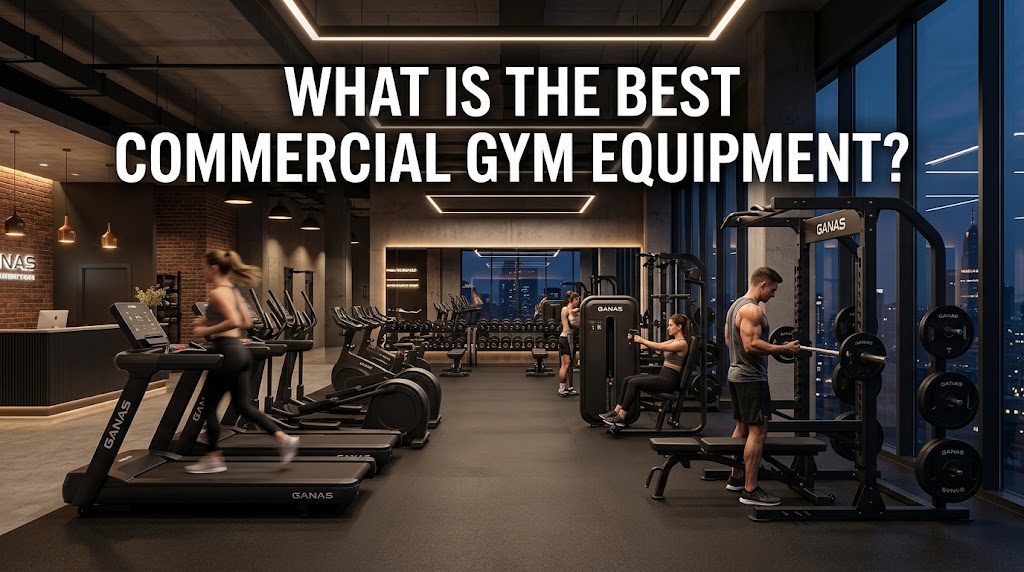
The best commercial gym equipment is equipment that matches your facility's training needs, withstands regular use, and offers appropriate safety features, comfort, and long-term value. For most commercial gyms, a balanced combination of strength machines, free weights, and Cardio Equipment provides a practical foundation.
Strength training equipment is essential for commercial gyms because it supports muscle development, progressive resistance training, and general physical conditioning. Selectorized machines, plate-loaded machines, and specialized lower-body equipment serve different training purposes.
Popular commercial strength training machines include:
Chest Press Machine: Targets the chest, triceps, and front shoulders through a guided pressing movement.
Lat Pulldown Machine: Trains the back muscles and biceps through vertical pulling exercises.
Seated Row Machine: Supports horizontal pulling movements to develop the back and arms.
Leg Press Machine: Provides a guided lower-body exercise targeting the quadriceps, glutes, and hamstrings.
Leg Extension Machine: Focuses primarily on the quadriceps.
Leg Curl Machine: Targets the hamstrings through knee flexion.
Hip Abductor Machine: Trains the muscles involved in moving the thighs outward, including the gluteus medius and gluteus minimus.
Shoulder Press Machine: Targets the shoulders and triceps through an overhead pressing movement.
For facilities serving beginners and experienced gym members, a combination of upper-body and lower-body machines can provide a structured training experience. When selecting commercial Strength Equipment, consider adjustment options, movement quality, frame construction, maintenance requirements, and the manufacturer's stated loading limits.
Free weights remain an important part of many commercial fitness facilities. Dumbbells, barbells, weight plates, adjustable benches, and squat racks allow users to perform a wide variety of compound and isolation exercises.
Plate-loaded machines offer another option for resistance training. They combine external weight plates with a guided or mechanically supported movement, depending on the machine design.
Essential free-weight and plate-loaded equipment includes:
Dumbbells and dumbbell racks
Olympic barbells and weight plates
Flat and adjustable workout benches
Squat racks and power racks
Smith machines
Plate-loaded leg press machines
Weight plate storage racks
When purchasing free-Weight Equipment, buyers should also consider storage solutions. A commercial weight plate tree or weight plate rack helps keep plates organized and reduces clutter around training stations.
Cardio machines are another important category of commercial gym equipment. They support cardiovascular exercise, endurance training, warm-ups, and general fitness programs.
Common commercial cardio equipment includes:
Commercial treadmills
Elliptical trainers
Upright exercise bikes
Recumbent exercise bikes
Indoor cycling bikes
Rowing machines
Stair climbers
The best cardio equipment for your gym depends on member preferences, available floor space, expected usage, and maintenance capacity. For example, a full-service fitness club may benefit from several types of cardio machines, while a smaller studio may prioritize a more compact selection.
When comparing commercial cardio equipment, review the manufacturer's specifications, user weight limits, available workout programs, maintenance requirements, and warranty coverage.
Functional training areas help gyms provide versatile workouts that combine strength, coordination, mobility, and conditioning.
Depending on the facility's training programs, useful equipment may include:
Functional trainers and cable crossover machines
Kettlebells and medicine balls
Resistance bands
Suspension training accessories
Plyometric boxes
Functional training racks
Exercise mats
Functional training equipment can help personal trainers design varied sessions for individual clients and small groups. It is particularly useful in gyms that offer personal training, circuit training, and group fitness programs.
When searching for the best commercial gym equipment, buyers should look beyond the product name or purchase price. The following factors help determine whether equipment is suitable for a professional fitness environment.
Commercial gym equipment is used repeatedly throughout the day. A strong frame, suitable materials, reliable structural connections, and appropriate surface protection are important considerations.
Buyers should review the actual material specifications and construction details rather than relying only on general terms such as heavy-duty or professional grade.
Equipment should accommodate users with different body sizes and training experience. Adjustable seats, back pads, starting positions, handles, and resistance settings can improve usability when they are appropriate to the machine's design.
Ergonomic design should also support a controlled range of motion and clear user positioning. Gym owners should evaluate whether members can understand the adjustment system and operate the machine correctly.
For strength machines, the quality of the movement mechanism can affect the training experience. Depending on the equipment type, relevant components may include bearings, guide rails, pulleys, cables, and adjustment mechanisms.
These components should be inspected as part of equipment evaluation and maintained according to the manufacturer's instructions.
Safety is a critical consideration when buying commercial fitness equipment. Buyers should check the stability of the machine, the accessibility of adjustment controls, the design of safety stops where applicable, and the manufacturer's instructions for loading and use.
Equipment should be installed correctly and inspected regularly. Users should receive appropriate guidance before operating unfamiliar machines.
Even well-built fitness equipment requires routine maintenance. Before placing an order, ask about replacement parts, maintenance documentation, warranty terms, installation support, and technical assistance.
Reliable after-sales arrangements can help gym operators manage equipment downtime and plan long-term operating costs.
A successful gym equipment purchase starts with a clear understanding of your facility and business plan.
Consider who will use the gym. A commercial fitness club serving a broad membership may need a balanced selection of strength machines, free weights, and cardio equipment. A specialized strength training facility may prioritize racks, benches, barbells, plate-loaded machines, and heavy-duty strength equipment.
Your equipment list should reflect the training programs and services you intend to offer.
Measure the available floor space before selecting equipment. Account for the machine's footprint, user access, movement clearance, plate loading, and safe circulation around each station.
A compact layout can be efficient, but equipment should not be positioned so closely that users cannot exercise or move safely.
The lowest purchase price does not necessarily represent the best long-term value. Compare the initial equipment cost with shipping, installation, maintenance, replacement parts, expected service life, and warranty coverage.
For international buyers, it is also important to clarify shipping terms, packaging, delivery schedules, and responsibilities for installation or customs clearance.
Create a prioritized equipment list before requesting quotations. Start with the machines and accessories that support your core training programs, then expand the selection according to your budget and facility requirements.
This approach can help gym owners avoid unnecessary purchases while ensuring that essential workout areas are properly equipped.
Both manufacturers and distributors can be suitable purchasing channels. The right option depends on your order size, location, product requirements, and the level of service you need.
Working directly with a commercial gym equipment manufacturer may offer advantages for buyers who need coordinated product sourcing, customization discussions, or equipment for a complete gym project. A distributor may be convenient when local inventory, installation services, or regional support is a priority.
Before choosing a supplier, consider the following questions:
Does the supplier offer the equipment categories your gym requires?
Can it provide detailed product specifications and installation information?
Are warranty terms and after-sales responsibilities clearly defined?
Can it support your order quantity and delivery requirements?
Are OEM or ODM options available if customization is necessary?
Can the supplier help coordinate equipment selection for a complete fitness facility?
Compare suppliers using verifiable product information, service terms, and quotations rather than relying solely on marketing claims.
Ganas is a commercial gym equipment manufacturer offering strength training machines and fitness equipment solutions for professional fitness facilities. Its equipment range can support buyers who are building a new gym, expanding an existing facility, or sourcing multiple categories of workout equipment.
Depending on the project requirements, buyers can explore equipment categories such as chest press machines, lat pulldown machines, leg press machines, hip abductor machines, and other commercial strength training equipment.
When planning a complete gym, it is important to coordinate equipment selection with the facility's available space, target membership, training programs, and budget. Strength machines, free weights, storage accessories, and cardio equipment should work together to create a practical and organized training environment.
For gym owners, fitness equipment distributors, hotel operators, and commercial project buyers, Ganas can be considered as a supplier for professional gym equipment and broader fitness facility requirements. Contact the Ganas team to discuss your equipment list, product specifications, and available purchasing or customization options.


Previous: Best Gym Equipment for Glute and Lower Body Training
Tel: 86-13434225551
Mobile Phone: +86 13434225551
Address: Panatta Industrial Zone, Longtang Town, Qingcheng District, Qingyuan, Guangzhou City, Guangdong Province,China., Guangzhou, Guangdong
Website: https://www.ganasgym.com
Mail: ky008@ky868.com
Privacy statement: Your privacy is very important to Us. Our company promises not to disclose your personal information to any external company with out your explicit permission.
Fill in more information so that we can get in touch with you faster
Privacy statement: Your privacy is very important to Us. Our company promises not to disclose your personal information to any external company with out your explicit permission.